Do grape- and wine-derived (Poly) phenols contribute to the hallmarks of healthy brain ageing?
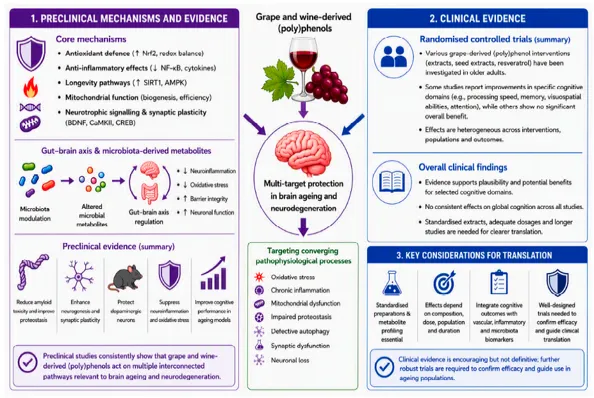
Grape and wine derived polyphenols may influence multiple biological pathways implicated in brain ageing, including oxidative stress, inflammation, and neuroinflammation, but clinical evidence of their effectiveness remains heterogeneous and inconclusive.
The global population is ageing, leading to increased cases of cognitive decline, dementia, and mood disorders among older adults. Over 50 million people currently live with dementia, which is projected to rise to 152 million by 2050. Brain ageing is influenced by biological processes like oxidative stress, inflammation, and vascular dysfunction, which increase neuronal vulnerability. Dietary options, particularly those involving (poly)phenols found in plant-based foods, are gaining attention for their potential to support brain health and mitigate age-related cognitive decline.
- Grape- and wine-derived (poly)phenols, such as resveratrol, are highlighted here for their possible roles in promoting cognitive resilience and interacting with gut microbiota to produce beneficial metabolites.
- Preclinical studies consistently support their neuroprotective effects, while clinical studies show more varied results, often indicating potential benefits in specific cognitive domains rather than overall cognitive improvement.
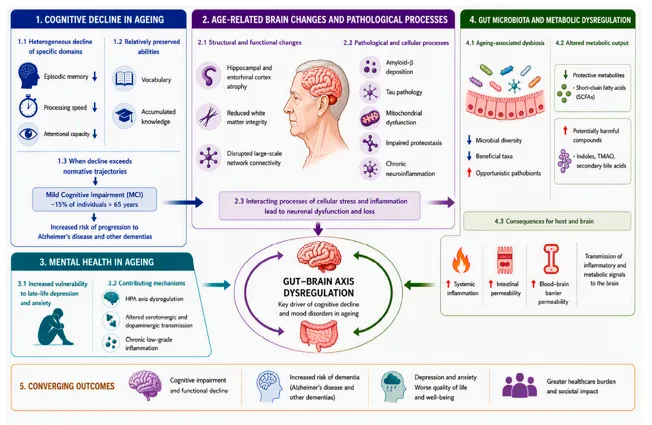
Rather than acting merely as antioxidants, these compounds and their metabolites may influence interconnected pathways involved in brain ageing. The gut microbiota is central to this process, as it converts poorly absorbed compounds into smaller phenolic metabolites and is itself modulated by polyphenol exposure.
Roles of Gut Microbiota in Brain Ageing:
- Microbial Metabolism: The gut microbiota helps metabolize grape- and wine-derived (poly)phenols into smaller, bioactive compounds that can enter circulation and potentially influence brain health.
- InflammationInflammation is a type of nonspecific immune response that defends the body against the constant thr... and Barrier Function: Changes in gut microbiota composition can lead to increased systemic inflammation and reduced integrity of the blood-brain barrier, which may contribute to cognitive decline and mood disorders.
- Short-Chain Fatty Acids (SCFAs): Gut bacteria ferment dietary fibers to produce SCFAs, which are important for maintaining gut health and may have neuroprotective effects by regulating inflammation and supporting blood-brain barrier function.
- Gut-Brain Axis: The gut microbiota communicates with the brain through various pathways, influencing neuroinflammatory responses and potentially affecting cognitive functions, mood, and overall brain health during aging.
They found that:
- Grape- and wine-derived (poly)phenols have a biologically plausible role in influencing brain ageing and mental health by engaging in multiple inflammatory, vascular, and metabolic pathways.
- Despite mechanistic support, the human clinical evidence does not yet confirm their effectiveness for preserving cognition or mental health, with findings varying significantly by preparation and context.
- Observational links between moderate wine consumption and cognitive outcomes should not be interpreted as causal, and the effects of phenolic compounds must be distinguished from those of ethanol in alcoholic beverages. There is a need for well-designed, standardized clinical trials to assess the potential benefits of these compounds within broader dietary and lifestyle factors, rather than recommending increased alcohol consumption based on current evidence.
- Challenges in translating findings to clinical practice include the heterogeneous nature of interventions, differences in preparation and composition, small sample sizes, and varying study designs. Future research should prioritize standardized interventions, detailed metabolomic and microbiome assessments, and integration of cognitive outcomes with other health measures to establish clearer links between (poly)phenol consumption and cognitive health.