
A new addition to the special issue Lifestyle, Diet, Wine and Health in Nutrients: Modifiable Lifestyle Factors in Cardiovascular Disease Prevention – Current Evidence and Future Directions
Modifiable health behaviours, including avoiding tobacco, maintaining a high-quality diet, engaging in regular physical activity, and promoting healthy sleep, are fundamental to cardiovascular disease prevention.
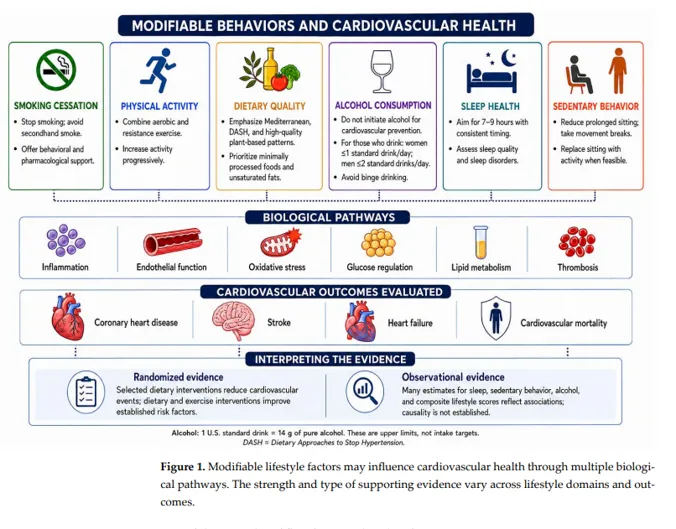
Cardiovascular disease (CVD) is the leading cause of death globally, with nearly 19.4 million deaths and 612 million people affected in 2021. Despite advancements in treatments and therapies, CVD continues to be a significant health challenge, with many events being preventable through lifestyle changes. Major lifestyle factors, such as smoking, physical inactivity, poor diet, consumption of alcoholic beverages, and inadequate sleep, contribute significantly to the development of various cardiovascular conditions.
The authors emphasize the need for updated evidence on modifiable lifestyle behaviours to improve cardiovascular health and highlight the importance of understanding how these behaviours interact with one another. Lifestyle behaviours often occur together and can have cumulative effects on cardiovascular health. Studies show that individuals with multiple favourable lifestyle factors, such as a healthy diet, regular physical activity, and non-smoking, have significantly lower cardiovascular risk compared to those with none. Observational research indicates that increasing the number of healthy lifestyle factors correlates with progressively lower risks of conditions like heart failure and coronary artery disease, even among people with a high genetic predisposition to these diseases.
Composite lifestyle scores, which assess clusters of behaviours, serve as indicators of overall health rather than as results of randomized interventions. This suggests that focusing on multiple lifestyle changes may provide greater health benefits.
Role of Alcohol Consumption in Cardiovascular Disease
- The relationship between the consumption of alcoholic beverages and CVD is complex and controversial. Some studies suggest that low to moderate alcohol intake may be associated with lower risks of certain cardiovascular outcomes, while higher consumption is linked to increased vascular risks and adverse effects.
- Observational studiesLike intervention studies observational studies attempt to understand cause-and-effect relationships... report that light-to-moderate alcohol intake could be associated with lower heart failure risk compared to non-drinking. However, these findings do not establish a causal benefit, and there are concerns about confounding factors that may influence results. For example, average intake incompletely captures drinking patterns, binge exposure, beverage type, and changes over time.
- Higher intake of alcoholic beverages is associated with various cardiovascular issues, such as hypertension, atrial fibrillation, and cardiomyopathy, highlighting the need for caution in interpreting the effects of alcohol on cardiovascular health.
- Overall, while some observational studies suggest potential benefits of low to moderate alcohol consumption, these findings have not been confirmed by well-designed randomized controlled trials, making it essential to approach alcohol consumption carefully regarding cardiovascular prevention.
The researchers conclude that modifiable lifestyle behaviours are crucial for preventing CVD. They highlight that strong evidence supports the benefits of smoking cessation, healthy dietary patterns, regular physical activity, and good sleep hygiene.
- While randomized trials provide robust data for dietary patterns and exercise, many findings related to alcohol, sleep, and sedentary behaviour come from observational studies, which limit causal conclusions.
- They further stress the importance of integrated prevention strategies that consider multiple lifestyle factors collectively, rather than in isolation, as their combined effects can be synergistic in improving cardiovascular health. More rigorous research which examines long-term adherence to lifestyle changes and their impact on CVD outcomes is needed, to effectively translate evidence into clinical practice and public health initiatives.

References
https://www.mdpi.com/2072-6643/18/18/3104